
Māori Birds (2022–2025) is a series of paintings exploring cultural reconnection, reinterpretation, and the evolving relationship between symbols, their natural origins, and the identities they convey. Incorporating the principal elements of Laurent’s visual language, the series develops a narrative through Māori and Polynesian symbols associated with birds, represented both individually and in compositions inspired by the construction of traditional Polynesian tattoo designs.
At the heart of this research lies a desire to reconnect these symbols with the natural world from which they emerged. Through the observation of birds, their movements, forms, and environments, Laurent questions how nature has shaped symbolic languages and how these representations have evolved through cultural transmission. Rather than approaching cultural heritage as a fixed visual vocabulary, the series considers its reappropriation as an active process of understanding, transformation, and renewal.
This approach also acknowledges the influence of artistic traditions beyond Polynesia. By bringing ancestral symbolism into dialogue with the work of artists from different cultural backgrounds, Laurent explores how external influences can contribute to a personal reconnection with one’s heritage without diminishing its significance. The reinterpretation of symbols becomes both an act of cultural reclamation and an acknowledgment that identities, like artistic languages, are continually shaped by encounters and exchanges.
The series develops through three distinct approaches to the representation of symbols, each reflecting a different stage in this process of reconnection.
The first preserves the recognizable structures of traditional symbols while giving them exaggerated thickness, density, and an almost sculptural materiality. Influenced by the formal explorations of Antoni Gaudí and Joan Miró, these compositions evoke the weight of cultural inheritance and the effort involved in reclaiming knowledge that may have become distant or fragmented. Their substantial forms suggest that cultural reappropriation is neither immediate nor effortless, but requires attention, research, and a sustained engagement with memory.
The second approach introduces more geometric, squared interpretations of the symbols, shifting attention from their traditional outlines towards their meanings and environmental origins. Here, the shapes cease to be exclusively monochromatic and become spaces for figurative representation. A symbol associated with a bird, for instance, may contain an image of the sky or clouds, reconnecting the abstract sign with the environment that originally inspired it. This transformation creates a dialogue between representation and signification, inviting viewers to reconsider the relationship between a symbol, the natural phenomenon it evokes, and the cultural knowledge embedded within it.
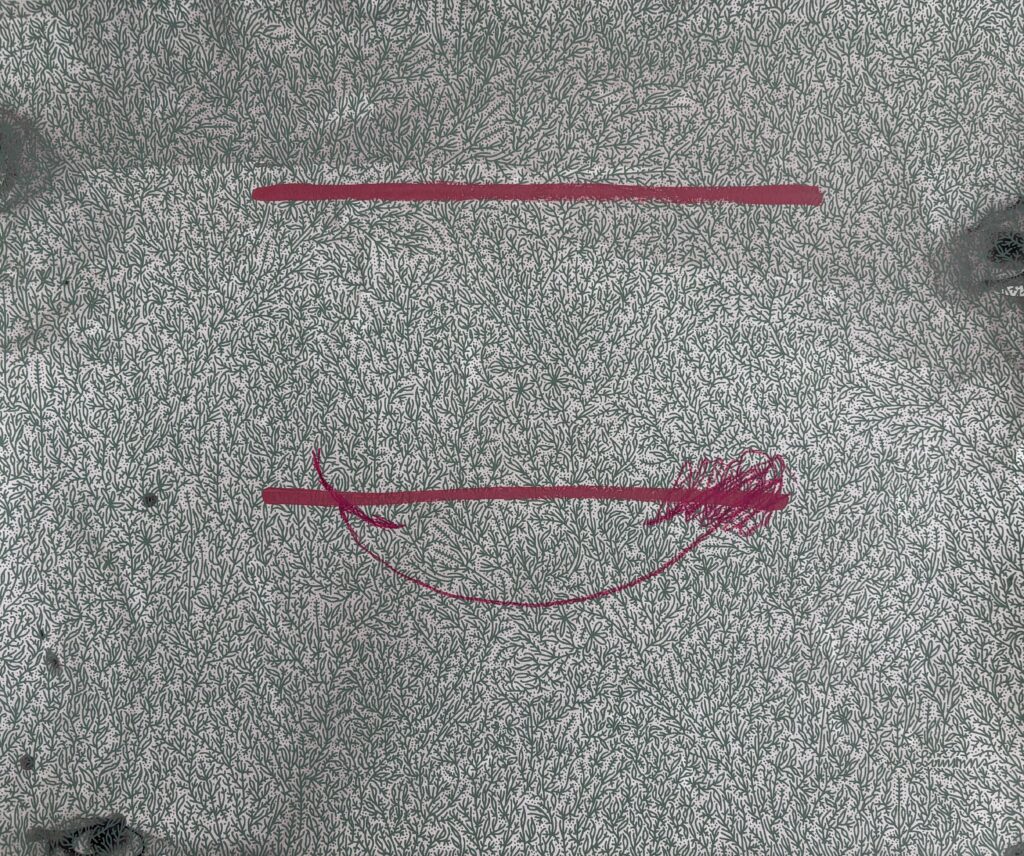
The third approach embraces spontaneity. Once the symbols and their meanings have been explored, understood, and personally assimilated, their representation becomes freer and more intuitive. Drawing inspiration from François Cheng’s reflections on souffle-esprit—the vital breath connecting artistic gesture, inner experience, and the natural world—and from the gestural language of Cy Twombly, Laurent allows the symbols to emerge through movement and instinct. The act of painting becomes less concerned with reconstructing an inherited form than with expressing a living relationship to its meaning.
Together, these three approaches trace a progression from the material effort of cultural reconnection, through the rediscovery of meaning, towards the freedom of personal expression. They do not establish a hierarchy between tradition and reinterpretation, but instead suggest that cultural continuity can exist through transformation.
Ultimately, Māori Birds reflects on the possibility of reclaiming one’s cultural heritage without confining it to an immutable past. By reconnecting symbolic forms to the observation of nature, embracing influences from elsewhere, and allowing personal experience to reshape inherited visual languages, Laurent approaches cultural reappropriation as a living, creative process—one in which memory, environment, and imagination participate equally in the construction of identity.
linked research and project :
Signs of Belonging : Symbolic languages and cultural transmission.
exhibition :
2026, March 26 – 29 : « Artist Project », Enercare Center. Toronto. CANADA